Natural resinous compounds harvested by honeybees have transitionally occupied a highly regarded status in nutritional science and OTC throat care. Among these, bee propolis serves as a primary bio-material utilized within dietary throat sprays. These sprays have emerged as popular consumer options for minor throat discomfort and mucosal dryness, positioning propolis as a compelling alternative to synthetic chemical lozenges.
However, because dietary supplement labels frequently rely on marketing buzzwords like "pure bees" or "immunity defense" without detailing the underlying biochemistry, consumers face difficulty distinguishing between low-concentration aqueous sprays and highly bio-active, standardized extracts. This guide evaluates the botanical realities of propolis throat sprays, providing evidence-based metrics to guide smart product choices.
1. Understanding Bee Propolis
Honeybees do not produce propolis internally. Instead, they gather botanical exudates, resins, and tree sap from select poplars, conifers, and birches. Back at the hive, bees combine these raw saps with natural salivary enzymes and beeswax to create a highly complex resinous material known as propolis.
Historically termed "bee glue," propolis is used as a physical and biological defense system. Bees use it to seal microscopic cracks, smooth interior chamber walls, and preserve the structural integrity of the colony. Bio-chemically, this resin is remarkably intricate, containing over 300 active organic compounds. The primary active constituents are polyphenols, specifically flavonoids and phenolic acids, which are thought to provide the material's protective biological properties.
2. Action in Throat Sprays
In the context of temporary throat discomfort, propolis is not a medical cure or targeted pharmaceutical treatment. Instead, laboratory observations indicate that propolis functions primarily as a physical barrier. When sprayed directly onto the oral and pharyngeal membranes, the viscous resin forms a highly protective mucosal coating.
This physical coating shields sensitive nerve endings in the throat from dry atmospheric drafts, environmental allergens, and dust particles, helping soothe minor, temporary dry tickles. Furthermore, in vitro studies have shown that the flavonoids in propolis possess mild antioxidant properties that support localized cellular health at the surface level, although systemic clinical conclusions remain under active investigation.
3. Alcohol-Free (Aqueous) vs. Alcohol-Based Extracts
The vehicle used to extract propolis from its raw, waxy state dictates both its tolerability and chemical composition. When selecting a throat spray, consumers must evaluate the following extraction methods:
| Extraction Vehicle | Chemical Extraction Profile | Oral Tolerability | Ideal Consumer Classification |
|---|---|---|---|
| Alcohol-Based (Ethanol) | High yield of hydrophobic flavonoids and heavy resins. | Sharp, burning oral sensation; can cause mucosal dryness with frequent use. | Adults seeking high-concentration, targeted resins. |
| Alcohol-Free (Aqueous / Glycerin) | Lower yield of waxy resins, but highly stable hydrophilic flavonoids. | Mild, sweet, non-irritating taste; safe for sensitive membranes. | Children, vocal professionals, and individuals sensitive to alcohol irritation. |
While ethanol (alcohol) acts as an excellent solvent for dense, hydrophobic resins, it often leaves a sharp, burning taste that some consumers find uncomfortable. Conversely, modern water-soluble and vegetable glycerin extracts provide a much milder experience, making them suitable for pediatric use and individuals seeking routine mucosal hydration without the drying effect of alcohol.
4. Label Check: What to Look For
Dietary supplement labeling can make identifying the quality of a propolis spray challenging. When reading a label, look for these key quality parameters:
- Flavonoid Standardization: Avoid products that only declare "propolis extract" as a raw weight without declaring active compounds. Standardized brands measure and list the concentration of active compounds, such as total polyphenols or total flavonoids (expressed as galangin or pinocembrin), ensuring a consistent bio-active dose per spray.
- Origin of Harvest: High-quality propolis is typically sourced from regions with established environmental standards, such as northern Europe, Canada, or New Zealand. These origins reduce the risk of pesticide or heavy-metal contamination, which can occur in uncontrolled urban or industrial agricultural zones.
- Carrier Base Check: Ensure the ingredient list aligns with your preferences. If labeled as "alcohol-free," the carrier should consist exclusively of vegetable glycerin, purified water, or liquid honey.
5. Who Should Avoid Propolis
Despite its natural origin, bee propolis contains highly active plant-derived resins that can trigger adverse biological reactions in certain populations.
CRITICAL BOTANICAL WARNING: Bee propolis is a known sensitizing agent. Individuals with documented allergies to bee stings, bee venom, honeybee products, poplar trees, or salicylates must avoid using propolis sprays, as they can trigger severe allergic contact dermatitis, oral swelling, or bronchospasms. If you have asthma or a history of respiratory hypersensitivity, consult a physician prior to use.
Because bees collect resins from poplar trees and various conifers, propolis naturally contains trace amounts of poplar bud resins and caffeic acid phenethyl ester (CAPE)—well-documented allergens that can trigger hypersensitivity. If minor irritation, redness, or oral itching occurs, discontinue use immediately.
6. Product Reference
For consumers seeking a standardized, non-irritating, and alcohol-free option, the following product serves as an industry standard.
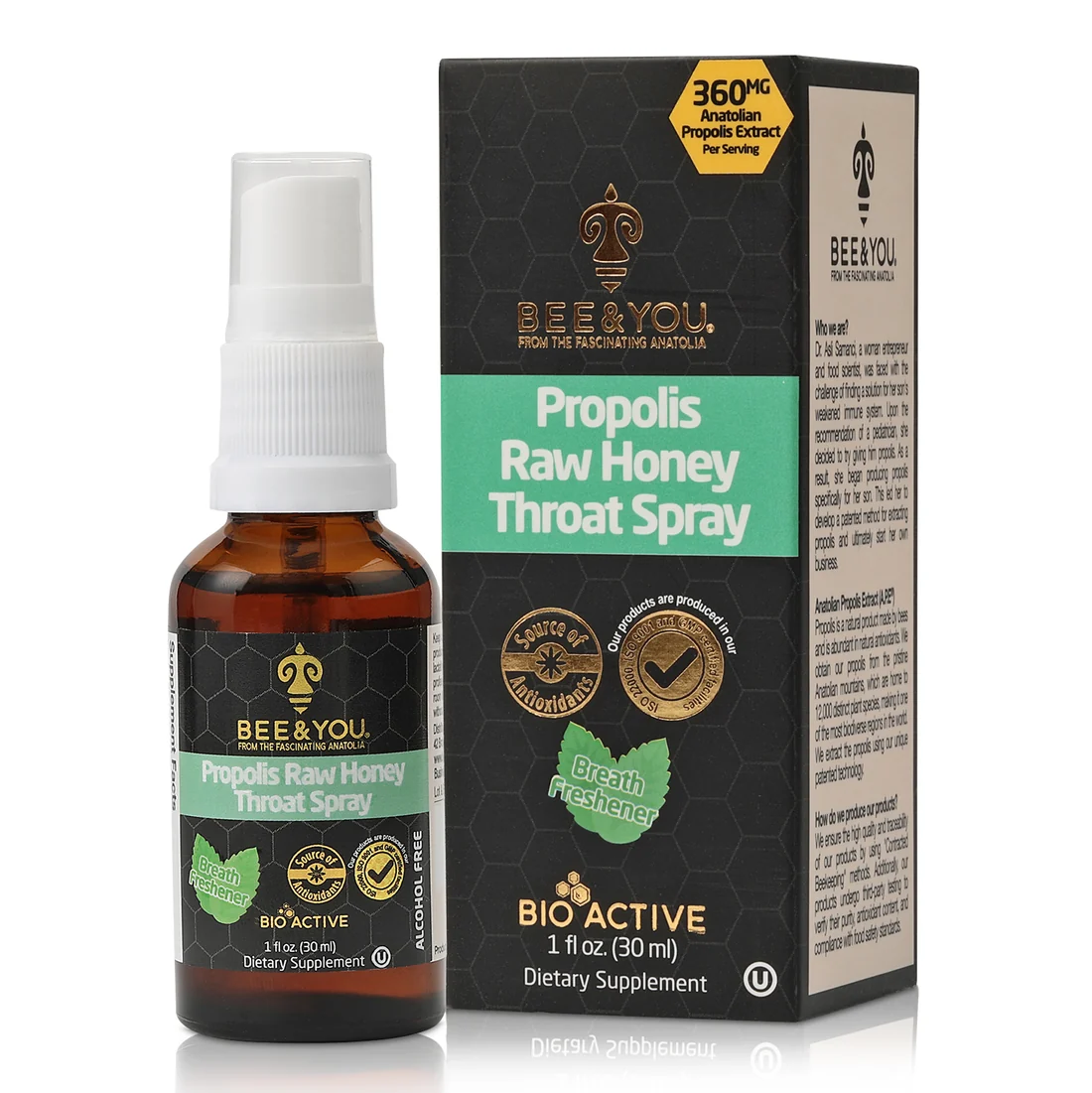
Bee&YOU Propolis+Raw Honey Throat Spray
Bee&YOU Propolis+Raw Honey Throat Spray combines standardized Anatolian propolis extract (A.P.E.) with raw honey and purified water in an alcohol-free liquid formulation. Designed for oral throat-spray application, it delivers naturally occurring flavonoids and polyphenols directly to the throat mucosa.
View Product on Bee&YOUIn summary, choosing an effective propolis throat spray requires looking past marketing claims to evaluate the extraction base and check for flavonoid standardization. By selecting a formulation tailored to your personal tolerance and respecting botanical allergy guidelines, you can safely integrate this historic apicultural resin into your wellness routine.