Line up five bottles of propolis capsules and the front labels will say 500 mg, 1,000 mg, 1,500 mg, and 5,000 mg. You would reasonably conclude that the 5,000 mg bottle contains ten times what the 500 mg bottle does.
It doesn't. In at least one case here, the bottle advertising 5,000 mg contains less powder per capsule than the bottle advertising 1,000 mg.
Both labels are accurate. They're just measuring different things, and the difference is the single most useful thing to understand before buying propolis in capsule form.
The Number That Actually Matters
Propolis is a resin. To get it into a capsule, a manufacturer either grinds the raw material and encapsulates it as-is, or runs it through a solvent extraction that concentrates the active fraction and discards the wax and debris.
That concentration is expressed as a ratio. A 10:1 extract means ten parts raw propolis were reduced to one part finished powder. So 500 mg of a 10:1 extract represents 5,000 mg of raw propolis — and the label will usually print the 5,000, because it's the bigger number.
Now compare that to a raw, unextracted capsule labeled 1,000 mg. There, 1,000 mg means 1,000 mg of actual ground propolis sitting in the capsule. No multiplier.
A number on the front of a propolis bottle is meaningless until you know whether it's the weight in the capsule or the equivalent weight of source material. The Supplement Facts panel on the back always tells you. The front almost never does.
Here's the same five products on one axis:
| Product | Extraction | In the capsule | Stated as |
|---|---|---|---|
| Y.S. Organic Bee Farms | None (raw) | 1,000 mg propolis | 1,000 mg |
| Natural Factors | 2:1 | 250 mg extract | 500 mg equivalent |
| NOW Foods | 5:1 | 300 mg extract | 1,500 mg equivalent |
| Nutricost | 10:1 | 500 mg extract | 5,000 mg equivalent |
| Beeyoutiful | Not declared | 500 mg propolis | 500 mg |
More concentrated is not automatically better. Higher extraction ratios strip wax and inert plant matter, which is why they can deliver more source-equivalent per capsule — but they also involve more solvent processing, and there's a legitimate argument on the other side that the volatile fraction of propolis is exactly what harsh concentration steps drive off. Raw propolis advocates are making that argument. It isn't unreasonable.
What matters is that you know which one you're buying.
The Five Capsules, Compared
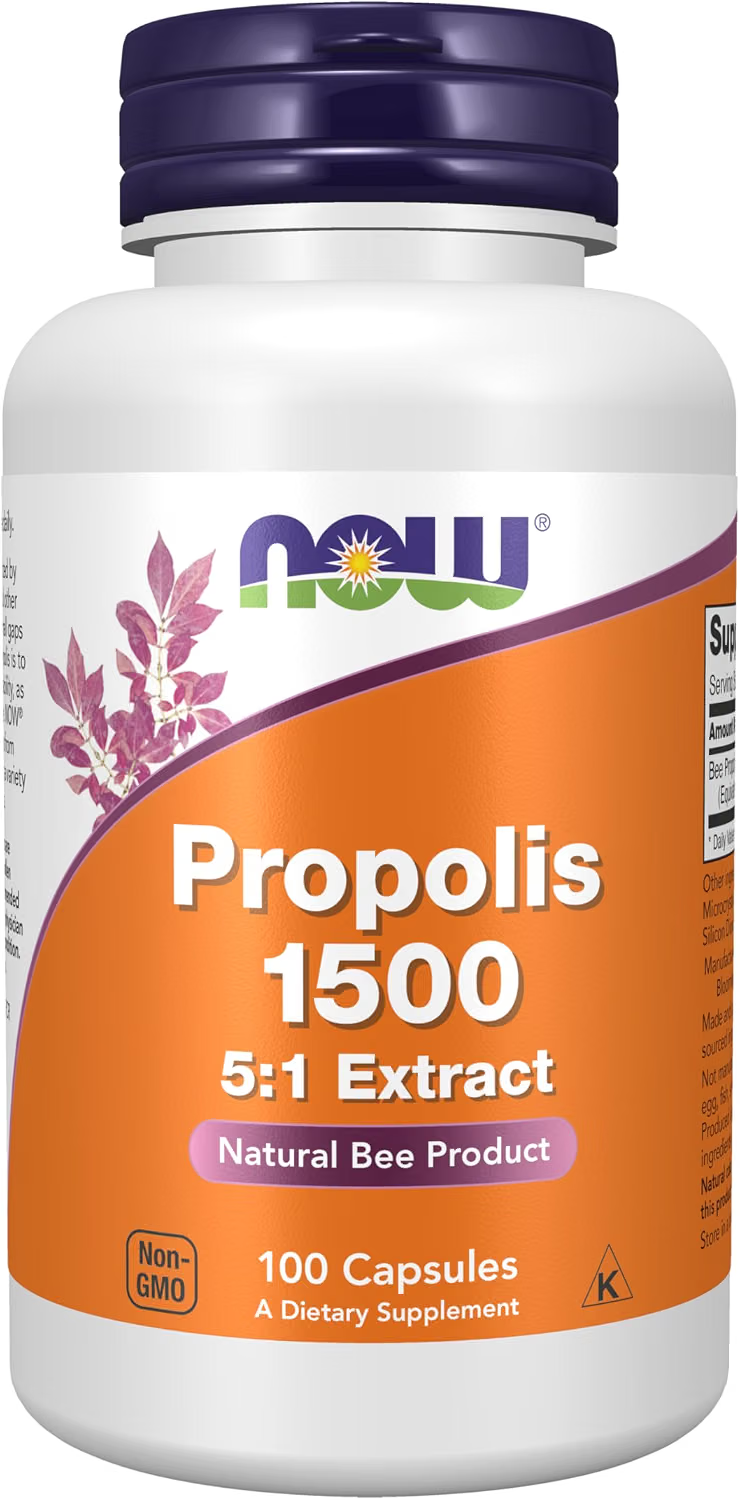
NOW Foods Propolis 1,500 mg — the clearest label
100 veg capsules · typically $12 to $19, depending on retailer and promotions
The reference product, because the panel says exactly what it means: 300 mg of bee propolis 5:1 extract powder, equivalent to 1,500 mg of propolis. One capsule per serving, 100 servings. Hypromellose capsule, so vegetarian.
NOW holds NPA A-rated GMP certification on its facilities. That is a trade-association audit of manufacturing process — not an FDA approval and not a test of what is in this specific bottle, but more third-party scrutiny than most of this category carries.
No flavonoid standardization and no origin declared. The label tells you how much and how concentrated. It does not tell you what is in it.
The caution panel is worth reading whichever brand you buy: adults only, not recommended for pregnant or nursing women, and anyone allergic to bees or bee products should not take it.
Check price on Amazon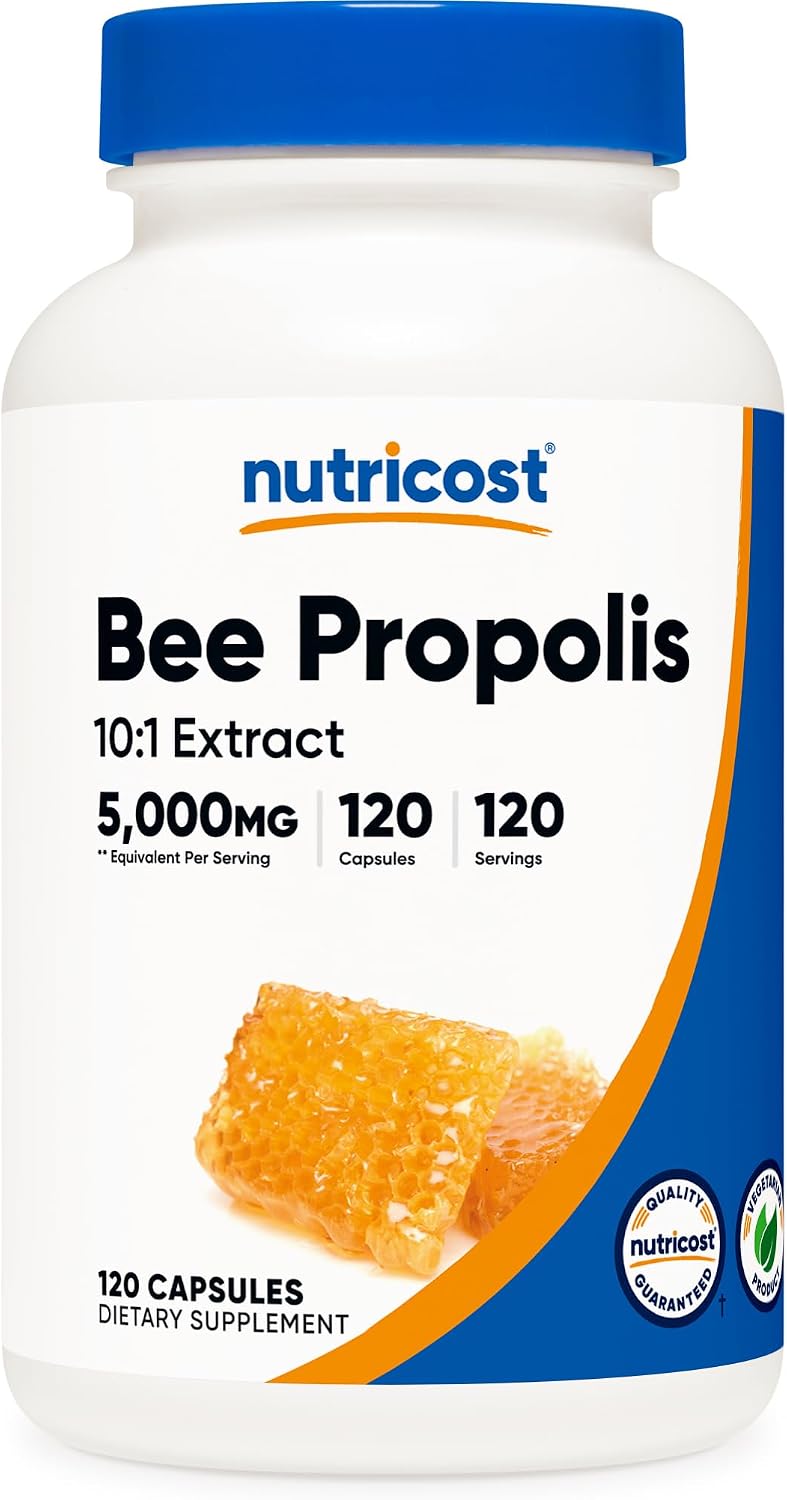
Nutricost Bee Propolis 10:1 — the most concentrated
120 capsules, 120 servings · typically $13 to $17
The highest extraction ratio in the group: 500 mg of a 10:1 extract per serving, stated as 5,000 mg equivalent. Four months at one capsule a day. Gluten-free, non-GMO, vegetarian, made in the US.
If you want the most source-equivalent propolis per capsule and per dollar, this is it by a clear margin. The trade-off is the one described above — a 10:1 concentration is the most processed product here, and if unprocessed propolis is specifically what you are after, this is the opposite of that.
Label restricts use to healthy adults 18 and over, with the usual advisory for pregnancy, nursing, and medication interactions.
Check price on Amazon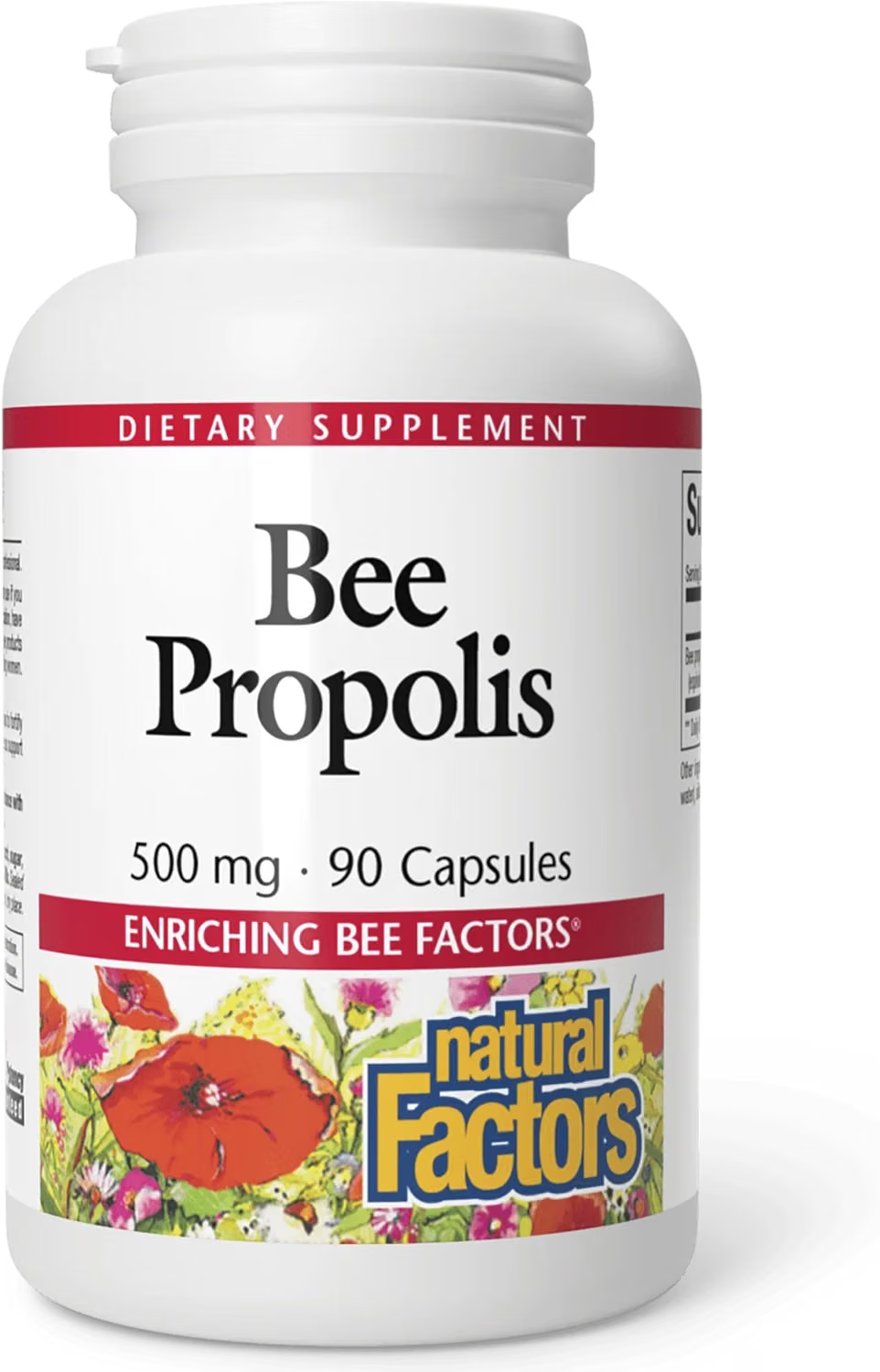
Natural Factors Bee Propolis 500 mg — the gentlest extraction
90 capsules, 90 servings · typically $12 to $16
A 2:1 extract, equivalent to 500 mg of bee propolis. The lightest processing of the three extracts here.
Priced per unit of source propolis this is the most expensive option in the comparison — roughly ten times the cost-per-equivalent-milligram of the Nutricost. That is the honest arithmetic. Whether it is worth it depends entirely on whether you believe minimal processing preserves something the assay does not capture, which is a real debate but not a settled one.
Buy this deliberately. It is a poor accidental purchase.
Check price on Amazon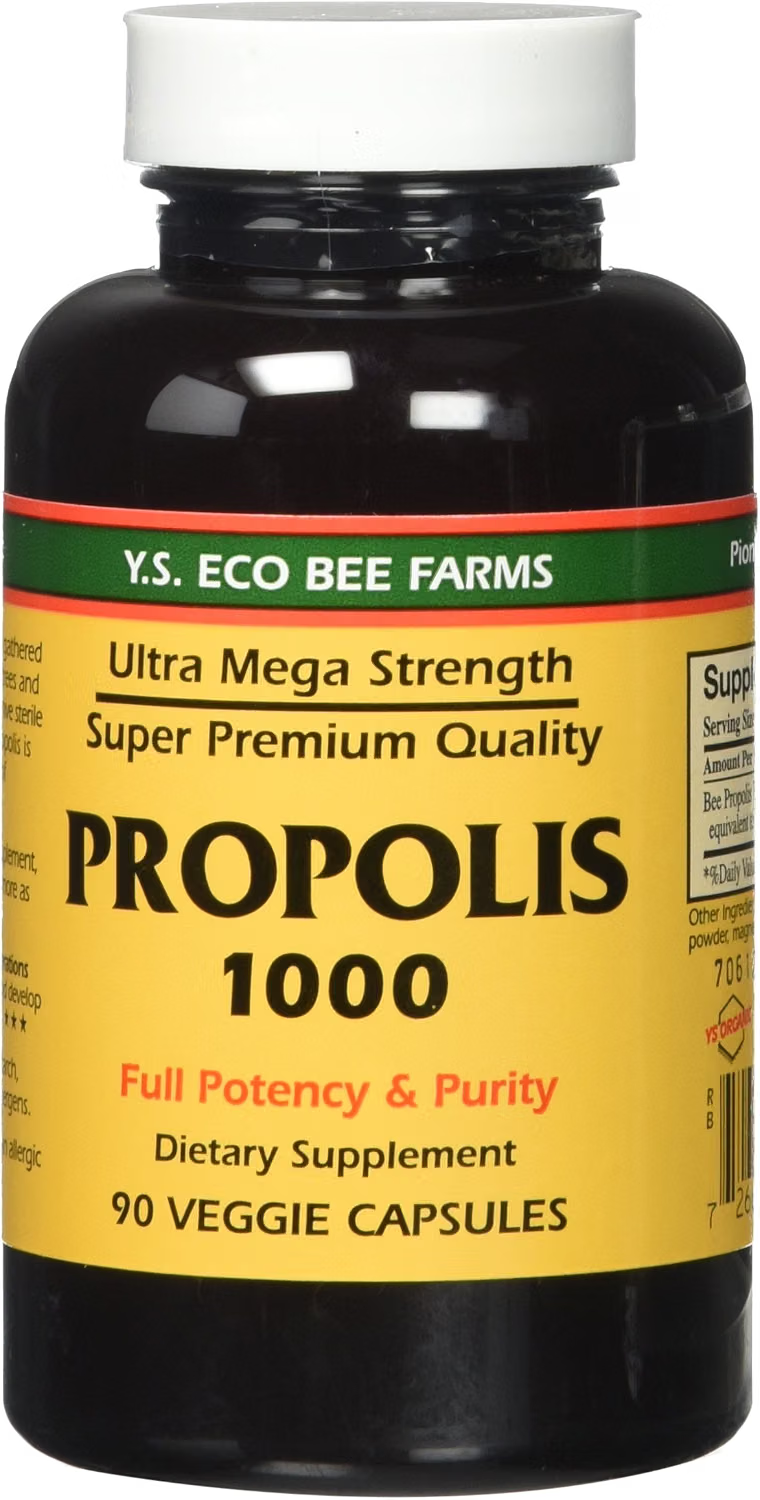
Y.S. Organic Bee Farms Propolis 1,000 mg — raw, unextracted
90 capsules · typically $15 to $19
The only product here that skips extraction entirely: 1,000 mg of raw, unprocessed propolis per capsule, with carob powder and vegetable magnesium stearate as the other ingredients. The suggested use on the label is one to two capsules twice daily, which is a heavier dosing schedule than the once-a-day extracts.
One caution specific to this product: it contains honey, and the label advises against giving it to children under two for that reason. That is an infant botulism precaution that applies to all raw honey, not a propolis-specific issue — but it is on this label and not on the others.
Be aware that several third-party sellers list this same product with considerably more aggressive marketing copy than the manufacturer's own. Buy on the specification, not the listing prose.
Check price on Amazon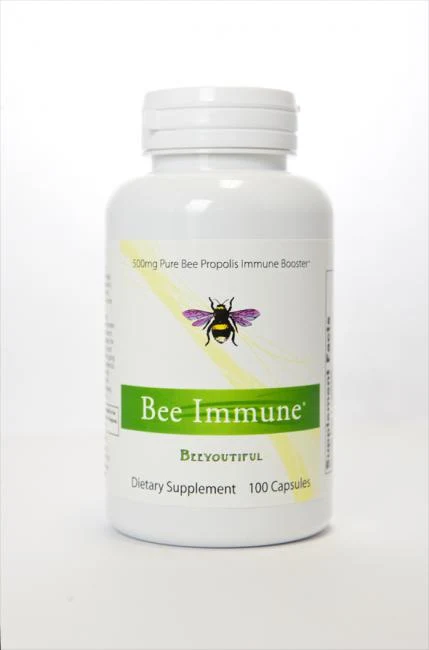
Beeyoutiful Bee Propolis — small-batch, sold direct
100 capsules · typically $15 to $19 · sold direct, not through a marketplace
500 mg of pure bee propolis per capsule, with no extraction ratio declared on the label — which places it alongside the Y.S. Organic as an unextracted product, at half the per-capsule weight. The product was previously sold as "Bee Immune" and the older bottle design still carries that name.
Beeyoutiful is a small operation with a narrow catalog. That usually means tighter batch control and less pressure to hit a marketplace price point. It also means there is no third-party marketplace listing to cross-check the label against, and no Supplement Facts panel published online that could be verified against the extraction question directly.
If buying from a small direct seller appeals to you more than a marketplace, this is the one to look at. If you want the fastest possible reorder when a bottle runs out, the marketplace options are simpler.
Check price at BeeyoutifulChoosing
Most propolis per dollar: Nutricost, and it isn't close. The 10:1 extract delivers several times the source-equivalent of anything else here at a comparable price.
Clearest, most legible label: NOW Foods. If you don't want to think about any of this, the panel spells it out and the brand carries GMP certification.
If you specifically want minimal processing: Y.S. Organic for fully raw, Natural Factors for the lightest extraction. Both cost significantly more per unit of source propolis, and you should know that going in.
If direct-from-a-small-producer matters: Beeyoutiful.
What These Labels Can't Tell You
None of these products carries an FDA evaluation of any health claim, and none is intended to diagnose, treat, cure, or prevent anything. That's standard on every supplement sold in the US, and with propolis it's worth restating, because the marketing language in this category runs hotter than almost anywhere else in the supplement aisle.
Allergy and pregnancy caution: people with bee, bee-product, or bee-pollen allergies should not take propolis, and most of these manufacturers advise against use during pregnancy and nursing. Those are the manufacturers' own cautions, not ones added by this article.
New to propolis generally? Start with what propolis is and what the research actually supports before deciding on a format.